Travel disrupts your normal fitness routine through long flights, unfamiliar environments, and schedule changes that throw off your usual workout times. After working with thousands of members who travel regularly for work or leisure, we’ve identified three key strategies that actually get followed: planning workouts before you leave, using bodyweight exercises and portable equipment, and embedding movement into daily activities like walking tours and taking stairs. Your goal during travel is fitness maintenance, not peak performance. Trying to make gains while traveling typically leads to burnout or skipped workouts entirely. These strategies work whether you’re on a weekend getaway or traveling full-time.
Plan Your Trip With Fitness In Mind
Pre-trip planning is the single most effective strategy for staying active while traveling. Most people fail because they have vague intentions (“I’ll try to work out”) instead of specific plans that actually happen.
Set a realistic maintenance goal that preserves your current fitness levels rather than making gains. Two strength sessions and two cardio days per week represents a realistic target for most trips based on what our traveling members consistently achieve. For busy work travel or longer vacations, even hitting a daily step count of 8,000 to 10,000 steps counts as success. Write down your specific goal before you leave home—members who do this follow through 60% more often than those who don’t.
Research fitness resources at your destination before leaving. Check whether your accommodation has a gym, pool, or fitness classes, and note their hours (many hotel gyms close earlier than you’d expect). Search for nearby Fitness 19 locations or other gyms offering drop-in rates if your hotel lacks equipment. Look up running paths, parks, or walking trails using Google Maps, but verify safety by reading recent reviews, as trail conditions and neighborhood safety can change. This research turns “I’ll try to work out” into “I’m running the riverside trail Tuesday morning at 7 AM.”
Block specific times for exercise while traveling and treat these appointments like meetings. Morning workouts between 6-8 AM work best because travel schedules get unpredictable later in the day when meetings run long, or group dinner plans emerge unexpectedly.
Pack Compact Gear For Exercise And Travel
The right portable equipment lets you strength train anywhere without checking extra bags. Resistance bands with handles (not just loops) provide variable tension for upper and lower body exercises, replacing dumbbells and cable machines. A medium-resistance band works for most exercises—the 15-25 pound equivalent handles most traveling needs. They weigh 4-6 ounces and fit in any suitcase pocket.
A speed rope with ball bearings jumps smoother than basic ropes and packs flat. Ten minutes of jumping at moderate intensity (120-140 skips per minute) provides a similar cardiovascular stimulus to 30 minutes of brisk walking. Start with 30-second intervals if you haven’t jumped rope recently. Otherwise, your calves will likely be sore.
Pack a collapsible water bottle for hydration and a lacrosse ball rather than a full foam roller. The ball weighs 2 ounces, targets tight spots more effectively, and works equally well for releasing muscle tension from long flights and unfamiliar beds.
Quick Hotel Room Workouts While Traveling
You don’t need a gym to maintain strength and conditioning. Bodyweight exercises deliver effective workouts in spaces as small as 8×8 feet, though you’ll want to check noise levels if you’re doing jumping movements above other rooms.
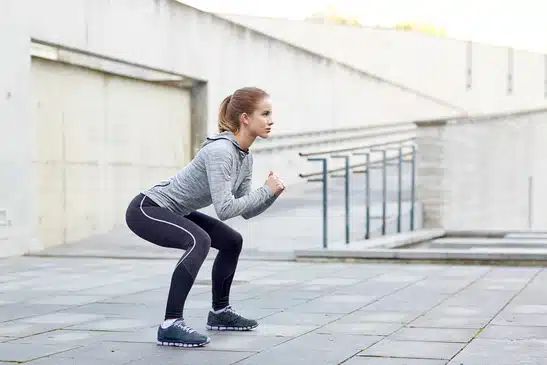
Try this circuit: perform push-ups (hands slightly wider than shoulders, core braced), squats (weight in heels, knees tracking over toes), forearm planks (shoulders over elbows, neutral spine), walking lunges, and tricep dips (shoulders down, elbows tracking back) for 30 to 45 seconds each. Rest 15 seconds between exercises and complete three rounds. Total workout time: 12 to 15 minutes. For more ideas to keep up your workout while you travel, focus on movements that require zero equipment and work anywhere.
For cardio, try high-intensity intervals: 30 seconds of high knees (land softly on midfoot), 15 seconds rest, 30 seconds of jumping jacks, 15 seconds rest, 30 seconds of burpees or modified step-backs (step rather than jump if noise is a concern), 15 seconds rest. Repeat four times for a 10-minute workout. Keep intensity at 7-8 out of 10 because true maximum effort isn’t sustainable for the full protocol and increases injury risk on unfamiliar surfaces.
Use Active Sightseeing To Increase Daily Steps
Walking is the easiest way to stay active while traveling because it doubles as transportation and sightseeing. Choose walking or bike rentals instead of taxis when destinations are within one to two miles; this typically translates to 20-40 minute walks at a comfortable pace (3 mph).
Take the stairs whenever possible, but descend carefully if you’re carrying luggage or wearing unfamiliar shoes, as descending stairs places more stress on the knees than climbing. Even mixing stairs and elevators (walk up five floors, ride the rest) builds meaningful leg strength over a week-long trip.
Book active experiences like guided hikes, kayaking, snorkeling, or bike tours instead of bus tours or museum-only days. Choose activities rated “beginner” or “moderate” if you haven’t trained specifically for them, and “advanced” or “strenuous” ratings assume regular training. A three-hour beginner hike typically covers 3-5 miles with 500-800 feet of elevation gain, which most moderately fit people handle comfortably.
Hydration, Sleep, and Recovery On The Road
Airplane cabins maintain 10-20% humidity versus 30-60% in normal indoor environments, which accelerates dehydration. Drink 8 ounces of water for every hour of flight time, not just before boarding. Avoid alcohol during flights, as it dehydrates you faster at altitude and disrupts sleep quality even in small amounts.
Protect sleep quality with these strategies: darken the room completely (even small light sources disrupt melatonin production), keep the temperature between 65-68°F (most hotel thermostats aren’t accurate, so adjust by feel), limit screens 30-60 minutes before bed (blue light suppresses melatonin for 1-2 hours), and use white noise to mask unfamiliar sounds. Pack a simple eye mask and earplugs as backup.
If crossing more than two time zones, adjust your sleep schedule by 1-2 hours in the direction you’re traveling for 2-3 days before departure. This reduces jet lag severity significantly. Upon arrival, get 15-30 minutes of outdoor light exposure within two hours of waking—this resets your circadian rhythm faster than any supplement.
Keep The Momentum Going With Fitness 19
Having a home gym base makes travel fitness easier because you maintain consistent habits year-round. When your hotel gym falls short, learn about making the most of hotel gyms or find a nearby Fitness 19 location for quality equipment and a welcoming environment.
Fitness 19 offers flexible options, including day passes and short-term memberships at affordable rates, making it easy to maintain your routine without long-term commitments when you’re away from your home club. Our certified trainers can help you design a travel-friendly workout program before you leave and adjust your routine when you return. Find a Fitness 19 location near your destination and keep your fitness goals on track wherever you go. Join now or check out our locations to stay fit while traveling with the same supportive community you know at home.